
Procurement Negotiations
The SaaS / Software Procurement Playbook: Your 30% Discount Is Not a Discount
Business Negotiation Academy
August 22, 2026
There is a term in a large share of software agreements that costs organisations six figures, appears on the first page of the order form, and is almost never noticed, because on the surface it looks entirely reasonable.
It isn’t buried. It isn’t hidden. It’s how your discount is written down.
Two ways to record the same deal
Option one. The order form states a unit price: £500 per user per year.
Option two. The order form states a thirty percent discount off list price. List is £714. So you pay £500.
A thousand users. £500,000 a year. Identical.
Most buyers would tell you those are the same contract. They are not remotely the same contract, because in option two the vendor controls list price, and your price is calculated from a number they set.
So they raise list by eight percent a year. Which is unremarkable. Nobody writes to tell you.
| Discount off list | Fixed price, 3% cap | |
| Year 1 | £500,000 | £500,000 |
| Year 2 | £540,000 | £515,000 |
| Year 3 | £583,200 | £530,450 |
| Three-year total | £1,623,200 | £1,545,450 |
£77,750 over three years. Around £230,000 over five.
And throughout all of it your discount was thirty percent. Contractually protected. Never reduced. Ring the vendor and ask whether it has changed and they will say no, and they will be telling you the truth.
Nobody broke a promise. Nobody misled anybody. It is the most elegant price increase mechanism in software and it requires no negotiation at all, because you agreed to it on day one.
The fix is one sentence. Record a fixed price per unit in your own currency, not a percentage off a list price the vendor controls. If they insist on the percentage, require that the list price at signature is attached to the agreement as a schedule, so a rise in their published list has no effect on you.
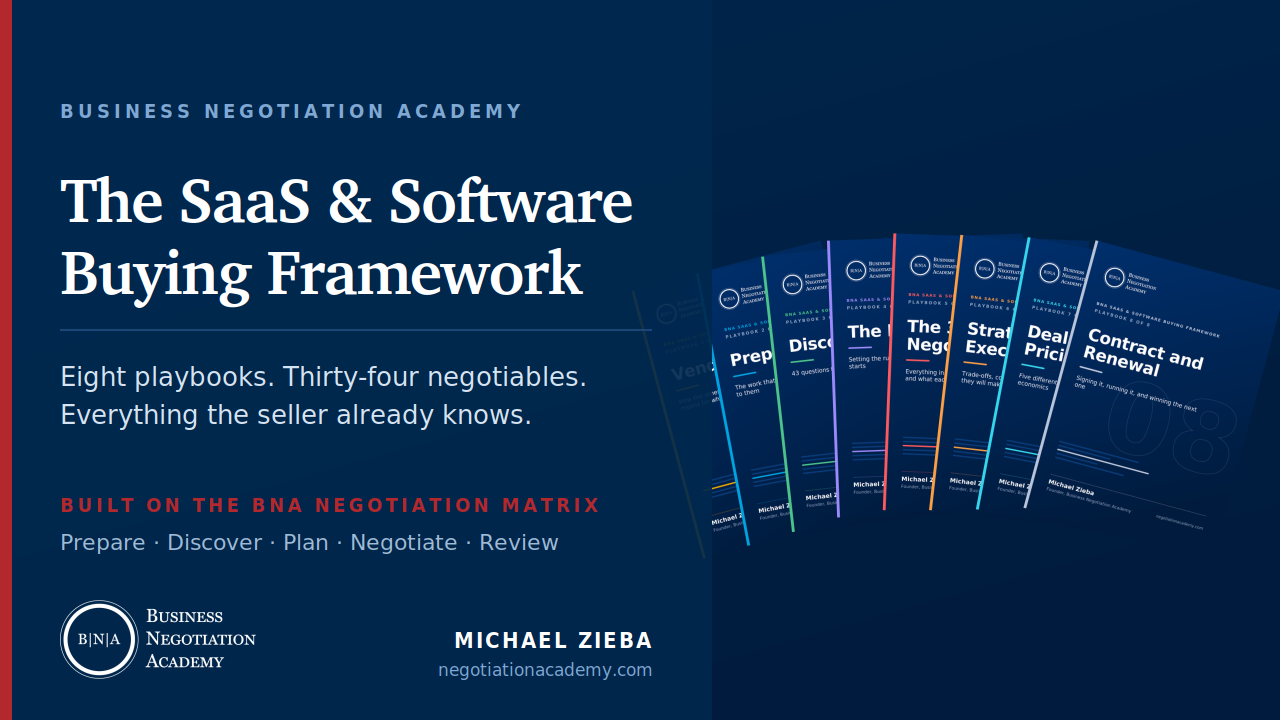
Price is one entry out of thirty-four
That clause matters in its own right, and it matters more as an illustration.
A software contract contains around thirty-four genuinely negotiable variables. Buyers negotiate one of them.
Some of the others, with what they’re typically worth:
The annual uplift cap. On a £500,000 contract across five years, the difference between seven percent and a hard three percent cap is £220,802. More than a fifteen percent discount would deliver, and the rep can agree to it without it touching their commission.
The right to reduce licence quantities. Fifteen percent at each anniversary on a typical estate is worth £161,438 across a three-year term, and then you renew from eight hundred and fifty seats rather than a thousand, so every future uplift compounds against a base £82,688 a year lower. This single clause is worth more than any discount most buyers will realistically negotiate.
The contractual definition of a user. Loose definitions generate audit findings. A hundred and twenty additional counted “users” at list price backdated eighteen months is a £219,150 problem created entirely by wording.
The renewal pricing mechanism. “At then-current list price” offers no protection at all. “At the previous year’s actual paid amount plus a capped uplift” is protection. On a mid-sized contract the difference in the first renewal year alone is £258,756.
Non-production environments. Sandbox, test and disaster recovery instances charged at full production rates run to £472,875 across three years. They cost the vendor almost nothing to provide and are among the cheapest concessions in the deal, if you ask at the point of initial purchase rather than during implementation.
Functionality guaranteed at your tier. When a capability you depend on moves into a higher edition, your cost rises thirty percent with no negotiation and no breach of your uplift cap, because the price of your tier hasn’t changed. You’ve simply been moved out of it.
How to actually use a list of thirty-four
You cannot negotiate thirty-four things. A buyer arriving with thirty-four asks gets three, and the vendor chooses which three.
Pick eight. Rank them by money at stake across the full term using your own contract values, not by how much each one annoys you. Then sort them by what each costs the vendor, because that determines when you raise it.
Roughly fourteen of the thirty-four are high value to you and cheap for the vendor to concede. Almost all of them are terms rather than price. Those belong in round one, before the commercial conversation opens, and you should not pay for them.
A handful are genuinely expensive to the vendor, usually because they threaten how revenue gets recognised. That’s where you spend everything you have.
And two of them get refused for structural reasons no matter how well you ask. Ask once, accept the answer, and don’t burn three meetings finding out.
Share
Recent Posts

August 31, 2026
The Price Negotiation Playbook: You’re Negotiating Against People Who Practise. With Instinct.
Your buyers negotiate for a living, or they’ve been trained by every seller who folded before you. You improvise. That gap has a...
August 26, 2026
The SaaS / Software Procurement Playbook: The Four-Line Clause That Cancels Everything You Negotiated
Imagine you’ve done everything right. Six weeks of negotiation. You won the uplift cap, the reduction rights, the data export terms, a limited...
August 25, 2026
The SaaS / Software Procurement Playbook: You Won £15,000. You Left £267,041.
Applying renewal tactics to a new purchase, or new-purchase optimism to an audit, is how buyers lose money while working hard. There are...